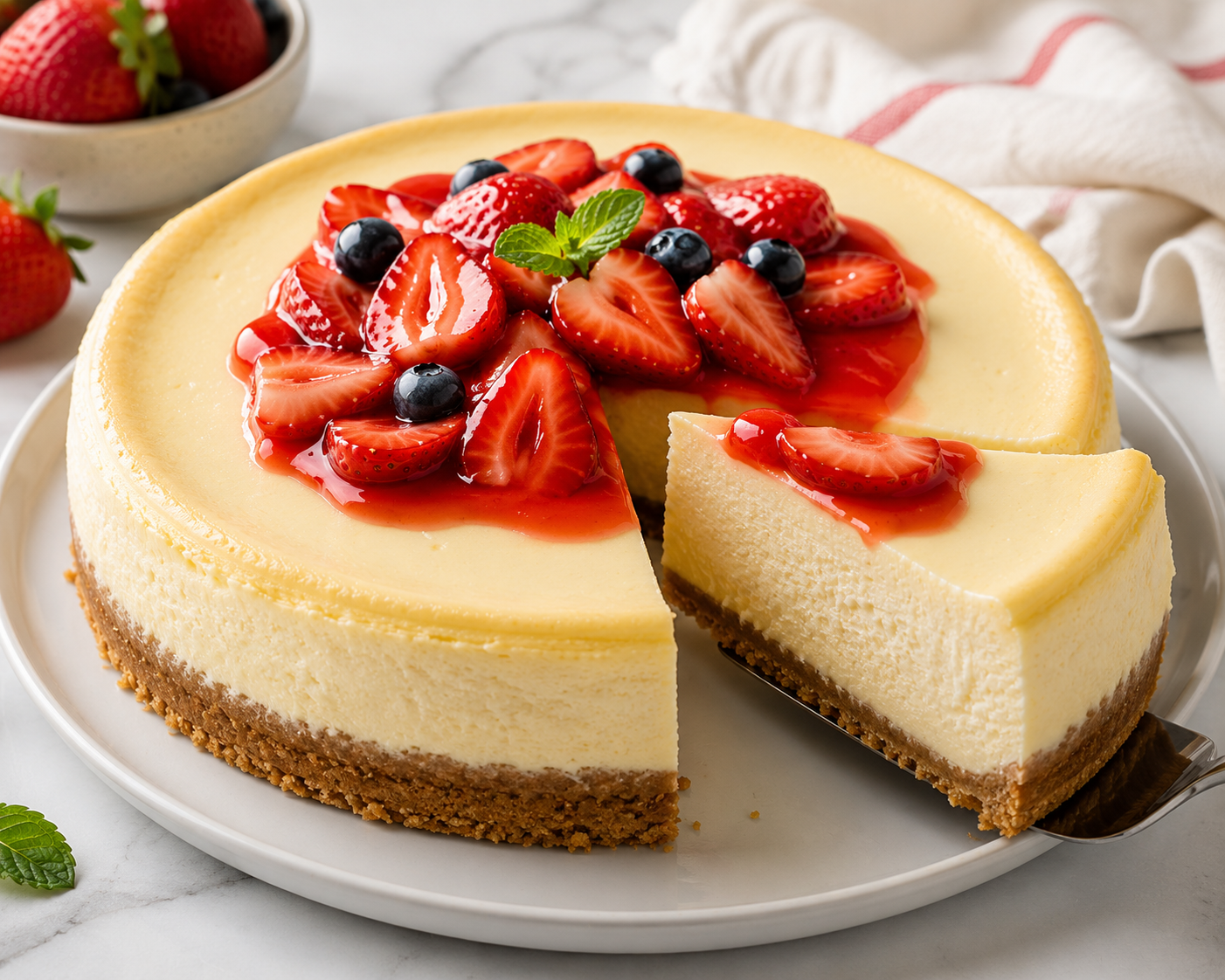
There is something special about a freshly baked cake. Whether it is a birthday, anniversary, wedding, family gathering, or simply a sweet craving, a good cake can turn an ordinary moment into a celebration.
But have you ever followed a recipe carefully and still ended up with a cake that was too dry, too dense, uneven, cracked, or simply not as delicious as you expected?
The problem may not always be the recipe. Small mistakes during preparation, baking, cooling, or decorating can make a big difference to the final result.
At Bakelogy.shop, we believe that understanding your cake is just as important as choosing the right ingredients. So, before you bake or order your next cake, here are 7 common cake mistakes you should avoid.
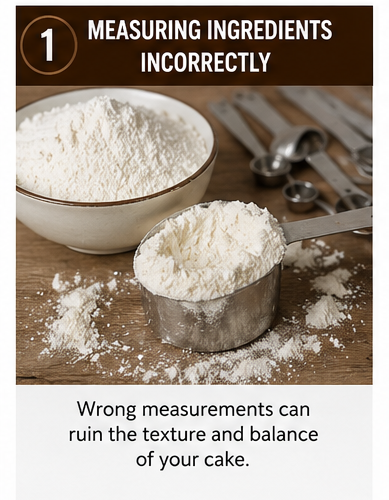
1. Measuring Ingredients Incorrectly
One of the biggest mistakes people make when baking is not measuring ingredients accurately.
Cooking often allows you to add “a little more” or “a little less” of an ingredient. Baking is different. It is much more precise because the ingredients need to work together in a particular proportion.
Adding too much flour, for example, can make your cake dry and heavy. Too much liquid can make the batter runny and affect the cake’s structure. Similarly, using too much baking powder or baking soda can affect the taste and cause the cake to rise too quickly and then collapse.
How to avoid it:
- Use measuring cups and spoons properly.
- If possible, use a kitchen weighing scale for greater accuracy.
- Follow the recipe measurements instead of estimating.
- Don’t pack flour tightly into a measuring cup.
- Double-check measurements before adding ingredients.
Remember, small measurement differences can create surprisingly big changes in baking.
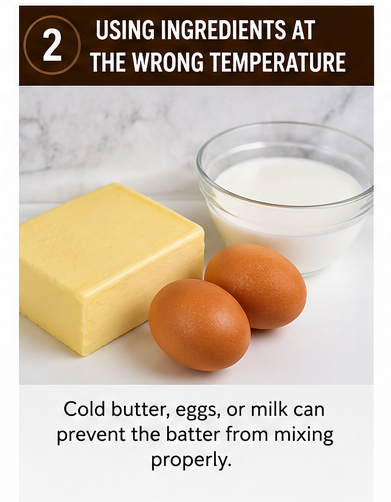
2. Using Ingredients at the Wrong Temperature
Another common mistake is using ingredients straight from the refrigerator when the recipe calls for room-temperature ingredients.
Ingredients such as butter, eggs, and milk can behave differently depending on their temperature. For example, room-temperature butter can mix more easily with sugar and help create a smoother batter.
Cold ingredients may not combine properly with other ingredients, resulting in a batter that is uneven or poorly emulsified.
This is particularly important for recipes that require creaming butter and sugar. The texture created during this stage can affect the final softness and structure of the cake.
How to avoid it:
Before starting, read the recipe carefully and check which ingredients need to be at room temperature.
Take refrigerated ingredients out ahead of time rather than trying to speed up the process.
However, don’t assume that every ingredient should be warm. Some recipes specifically require cold butter, cream, or other ingredients.
The right temperature depends on the recipe.
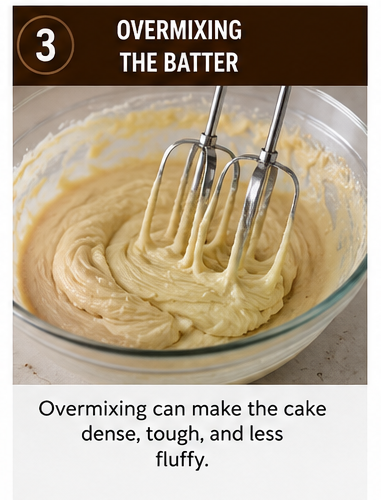
3. Overmixing the Cake Batter
Once all the ingredients are in the bowl, it can be tempting to keep mixing until the batter looks perfectly smooth.
But overmixing can actually work against you.
Flour contains proteins that can develop gluten when mixed with liquid. While some gluten development is useful in bread, too much can make a cake chewy, dense, or tough instead of light and soft.
This is one reason why cake batter should generally be mixed only until the ingredients are properly incorporated.
How to avoid it:
- Mix wet and dry ingredients according to the recipe.
- Scrape the sides of the bowl occasionally.
- Stop mixing once the batter is properly combined.
- If the recipe says to fold ingredients, use a gentle folding motion rather than vigorous mixing.
Your goal isn’t to mix the batter for as long as possible.
Your goal is to combine the ingredients without overworking them.
4. Opening the Oven Too Often
We’ve all been tempted to check the cake while it is baking.
You open the oven door, take a quick look, close it, and then check again a few minutes later.
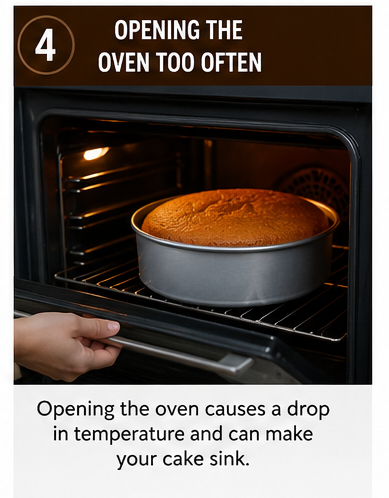
Unfortunately, repeatedly opening the oven can affect the temperature inside. A sudden drop in temperature, especially during the early stages of baking, can cause a cake to sink or bake unevenly.
This is particularly important for cakes that depend on consistent heat to rise properly.
How to avoid it:
Try not to open the oven during the early part of the baking process.
Instead, rely on the recipe’s suggested baking time and use the oven light to check the cake when possible.
Towards the end of baking, you can test the cake with a toothpick or cake tester. If it comes out clean or with a few moist crumbs, the cake is generally ready.
And remember: every oven is slightly different, so baking times are often a guideline rather than an absolute rule.
5. Baking at the Wrong Temperature
The oven temperature plays a major role in how a cake develops.
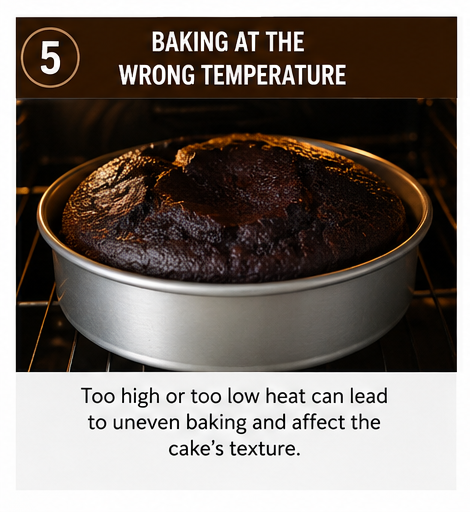
If the temperature is too high, the outside of the cake may cook or brown too quickly while the centre remains underbaked.
If the temperature is too low, the cake may take too long to set and can end up dense or uneven.
Sometimes the temperature displayed on an oven isn’t perfectly accurate either.
How to avoid it:
- Preheat the oven before putting your cake inside.
- Follow the temperature recommended in the recipe.
- Avoid constantly changing the oven temperature.
- If you bake regularly, consider using an oven thermometer to check the actual temperature.
- Place the cake in the recommended position inside the oven.
Preheating isn’t just a formality. The cake needs to enter an oven that has already reached the required temperature so the baking process can begin correctly.
6. Removing the Cake from the Pan Too Soon
The cake may smell amazing and look perfectly golden, so naturally you want to take it out immediately.
But patience is important.
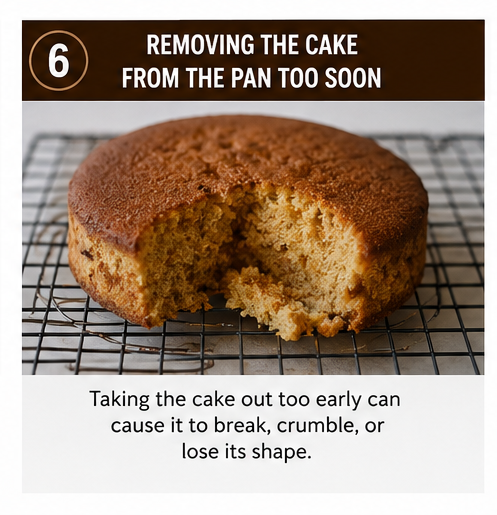
A freshly baked cake is still delicate. If you remove it from the pan while it is extremely hot, it can break, crumble, or lose its shape.
At the same time, leaving it in the pan for too long can sometimes cause it to become difficult to remove.
How to avoid it:
Allow the cake to cool according to the recipe instructions.
In many cases, letting the cake rest in the pan for several minutes before transferring it to a cooling rack works well.
Once the cake is stable enough to handle, carefully remove it from the pan and allow it to cool completely before decorating.
And never rush the frosting process.
Applying frosting to a warm cake can cause the frosting to melt, slide, or become messy.
A completely cooled cake is much easier to decorate.
7. Choosing the Wrong Cake for the Occasion
Not every cake is right for every celebration.
This is a mistake people often overlook because choosing a cake isn’t only about flavour. You also need to think about the number of guests, occasion, presentation, dietary preferences, and even the weather.
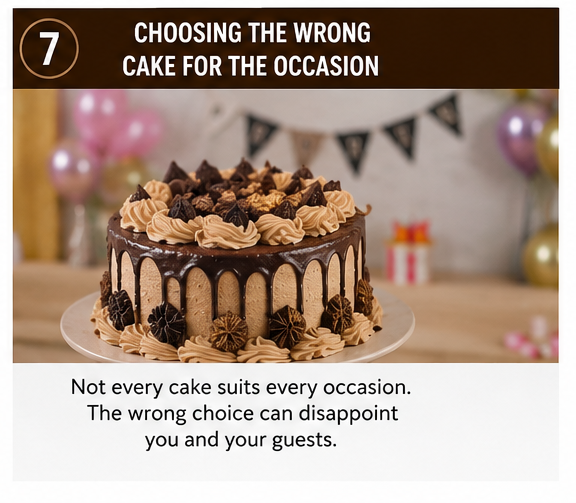
A heavy, highly decorated cake may not be the best choice for a casual afternoon gathering. A simple cake may not create the impact you’re looking for at a large celebration.
Similarly, choosing a flavour without considering the preferences of the people you’re serving can leave half the cake untouched.
How to avoid it:
Before choosing your cake, ask yourself:
How many people am I serving?
A cake that is too small may not be enough for everyone, while an unnecessarily large cake can lead to excessive leftovers.
What is the occasion?
Birthday cakes, anniversary cakes, wedding cakes, celebration cakes, and everyday desserts can all have different styles.
What flavours do the guests enjoy?
Chocolate may be a favourite for many, but some people prefer vanilla, red velvet, fruit-based cakes, coffee flavours, cheesecake, or other options.
Are there dietary preferences?
If your guests prefer eggless cakes or have specific dietary requirements, make sure you choose accordingly.
At Bakelogy.shop, the aim should always be to choose a cake that matches both the occasion and the people enjoying it.